
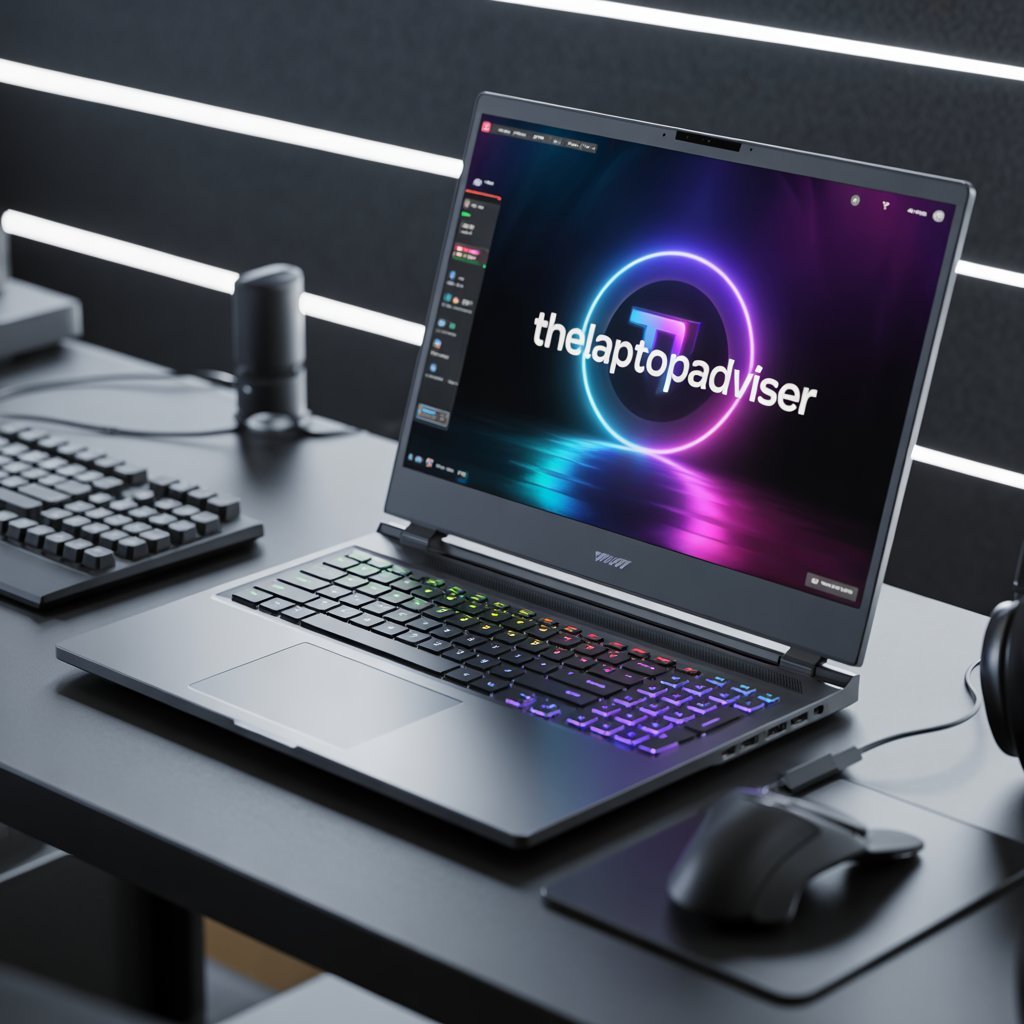
Introduction
Let’s be honest for a second. Shopping for a gaming laptop can feel like a maze. You’re bombarded with specs, acronyms like RTX and OLED, and price tags that make your wallet weep. It’s enough to make anyone just want to click “buy” on the first shiny option they see. But that’s a mistake. You deserve a machine that doesn’t just look good on a shelf but actually delivers where it counts: in your favorite games.
That’s where having a trusted guide changes everything. You need more than just a list of specs; you need real-world insight. For years, I’ve followed The LaptopAdviser expert gaming reviews because they cut through the marketing noise. They don’t just tell you a laptop has a fast processor; they show you how it performs after three hours of intense gameplay.
In this article, we’re going to pull back the curtain. We’ll explore what makes The LaptopAdviser expert gaming approach so effective. You’ll learn the key criteria they use to separate the champions from the duds. By the end, you’ll have the knowledge to confidently choose a gaming laptop that fits your life, your games, and your budget. Ready to level up your buying process? Let’s dive in.
What Makes The LaptopAdviser Expert Gaming Reviews Different?
You might be wondering, “Why should I trust one source over another?” It’s a fair question. In the world of tech reviews, everyone seems to have an opinion. But there is a distinct difference between a casual first-impression video and a deep-dive analysis.
The Core Philosophy: Real-World Testing Over Benchmarks
Many sites will run a few synthetic benchmarks and call it a day. They’ll show you a number from a program called 3DMark and say, “This is good.” But what does that number actually mean for your gaming session? The LaptopAdviser expert gaming philosophy focuses on real-world application.
They test laptops the way you actually use them. That means hours of gameplay in titles like Cyberpunk 2077, Call of Duty, and Baldur’s Gate 3. They check the frame rates in the middle of a firefight, not just in a quiet menu. They measure the temperature of the keyboard deck after a long session to see if it becomes uncomfortably hot to the touch. This approach gives you a practical understanding of what to expect, rather than just a theoretical one.
A Focus on Long-Term Usability
A gaming laptop is a significant investment. You’re not just buying a device for today; you’re buying a machine you hope will last for years. This is a core part of their reviews. They evaluate build quality with a critical eye.
-
Hinge durability: Is it going to get wobbly after six months?
-
Thermal management: Does the cooling system hold up over time, or does it start to throttle (slow down) after a year?
-
Upgradability: Can you easily add more RAM or a larger SSD down the line?
They answer these questions so you aren’t left with a paperweight in 18 months.
The Critical Factors: What They Look For
When The LaptopAdviser expert gaming team sits down with a new laptop, they don’t just look at the sticker on the box. They have a checklist of crucial factors that determine whether a laptop earns a recommendation. Understanding these factors will transform how you evaluate any gaming laptop you see.
1. The GPU: The Heart of Gaming
The Graphics Processing Unit (GPU) is the single most important component for gaming performance. A powerful GPU is non-negotiable for high frame rates and visual fidelity.
They don’t just note which GPU is inside. They explain the nuances. For example, a “laptop” RTX 4070 is not the same as a desktop RTX 4070. They also highlight the critical importance of Total Graphics Power (TGP) . Two laptops with the same RTX 4060 chip can perform drastically differently if one has a higher TGP limit. A good review will call this out, ensuring you’re not paying a premium for a “crippled” version of a high-end card.
2. The Display: Your Window to the Game
You can have the most powerful GPU in the world, but if your screen is dim or has a slow response time, your experience will suffer. Display quality is a priority.
-
Refresh Rate: They explain why 144Hz is the baseline for smooth gameplay, and when a 240Hz or 360Hz panel is worth the extra cost for competitive esports players.
-
Resolution: The debate between 1080p and 1440p is common. A 1080p screen will get you higher frame rates. A 1440p screen offers a sharper image. They help you decide based on the GPU power and your gaming preferences.
-
Panel Technology: They discuss the differences between IPS (good color and viewing angles) and OLED (incredible contrast and deep blacks, but potential for burn-in). They give you the pros and cons so you can choose wisely.
3. The Keyboard and Build Quality
You touch your laptop every time you use it. A flimsy keyboard or a poorly built chassis can ruin the experience. This is where the personal touch comes in.
I’ve personally made the mistake of buying a laptop with a fantastic GPU but a mushy keyboard. It was a nightmare for typing and a disadvantage in competitive shooters. The LaptopAdviser expert gaming reviews always include detailed descriptions of key travel, actuation force, and overall typing comfort. They also comment on the chassis material. Is it a durable magnesium alloy or a cheap, fingerprint-magnet plastic? These details matter for daily use.

Top Picks: Finding Your Perfect Match
Not every gamer is the same. A student who plays casually has different needs than a professional esports competitor. The LaptopAdviser expert gaming reviews usually categorize their top picks to help you find the right fit for your specific situation.
Best Overall: The All-Rounder
This is the laptop that does everything well. It has a strong GPU, a great screen, solid battery life (for a gaming laptop), and a reasonable price. It’s not the cheapest, and it’s not the most powerful, but it offers the best balance. For many people, this is the sweet spot.
-
What to expect: A mid-to-high-tier GPU (like an RTX 4070), a 1440p 165Hz or 240Hz display, and a build that feels premium but not overly flashy.
-
Who it’s for: The gamer who plays a variety of titles, from AAA story-driven games to competitive multiplayer, and also needs the laptop for work or school.
Best Budget: Maximum Value
You don’t need to spend a fortune to get into PC gaming. A good budget pick focuses on delivering the best possible performance for the lowest possible price.
-
What to expect: An entry-level to mid-tier GPU (like an RTX 4050 or 4060), a 1080p 144Hz display, and a more basic, all-plastic chassis. Some sacrifices are made in build quality or screen brightness to hit the price point.
-
Who it’s for: The budget-conscious gamer, students, or anyone new to PC gaming who wants to play modern titles without breaking the bank.
Best High-End: No Compromises
This is the flagship. These laptops feature the most powerful components available. They are designed for gamers who want the absolute best experience, regardless of cost.
-
What to expect: Top-tier GPUs (like an RTX 4080 or 4090), stunning high-refresh-rate 1440p or even 4K displays, premium all-metal chassis, and advanced cooling systems to handle the massive heat output.
-
Who it’s for: Enthusiasts, content creators who also game, and anyone who wants a desktop-replacement experience in a portable form factor.
The Pros and Cons: A Balanced View
One of the most valuable aspects of The LaptopAdviser expert gaming approach is its honesty. They are quick to praise what’s done well, but they are equally quick to call out flaws. No laptop is perfect, and understanding the trade-offs is key to making a smart purchase.
The Pros of a Well-Reviewed Gaming Laptop
When a laptop gets a strong recommendation, you can typically expect these benefits:
-
Consistent Performance: The cooling system is effective, preventing the CPU and GPU from throttling during long gaming sessions. You get the performance you paid for, consistently.
-
Excellent Portability: You can take your entire game library anywhere. A high-quality gaming laptop offers a level of flexibility that a desktop PC simply cannot match.
-
Upgradability: A well-designed chassis allows for easy access to RAM and storage slots. This extends the lifespan of your investment significantly.
-
Immersive Experience: With a quality display and powerful audio, you are fully immersed in your games, experiencing them as the developers intended.
The Cons to Consider
It’s also important to be aware of the downsides before you buy.
-
Battery Life is a Universal Struggle: This is the biggest con of any gaming laptop. When you’re running demanding games, you will be tethered to a wall outlet. Even with “all-day” battery claims, gaming on battery power is rarely a good experience.
-
Fan Noise Can Be Intense: To cool powerful components, fans have to spin fast. Under load, gaming laptops can sound like a jet engine taking off. This is a trade-off for high performance in a slim chassis.
-
Heat is a Constant Challenge: The chassis can get uncomfortably hot, especially around the keyboard deck. You may need to use an external keyboard for extended gaming sessions to stay comfortable.
-
Premium Price Tag: To get the same level of performance as a desktop PC, you will pay a significant premium for the miniaturization and engineering required for a laptop.
Answering Your Burning Questions
As you navigate the world of gaming laptops, specific questions always come up. These are some of the most common ones that The LaptopAdviser expert gaming reviews frequently address.
What’s More Important: CPU or GPU?
For gaming, the GPU is king. A modern processor (CPU) is important for overall system speed and for games that are simulation-heavy, but the graphics card dictates your frame rates and visual settings. A balanced build is ideal, but if you have to choose, always allocate more of your budget to the GPU.
How Much RAM Do I Really Need?
16GB is the current sweet spot for gaming. It allows you to run modern games and have a few browser tabs open without any issues. 8GB is the absolute minimum and is often a bottleneck in new games. 32GB is becoming more common for enthusiasts and is a wise choice if you plan on keeping the laptop for several years.
Is a 4K Gaming Laptop Worth It?
Generally, no. Even the most powerful mobile GPUs struggle to run modern games at 4K resolution with high settings. You will often have to lower settings to get playable frame rates. A high-refresh-rate 1440p display is currently the “sweet spot” for high-end gaming laptops. It offers a sharp image and smooth motion that is actually achievable with the hardware inside.
How Do I Maintain My Gaming Laptop?
Maintenance is key to longevity. You should regularly clean the air vents and fans to prevent dust buildup, which causes overheating. Use a compressed air can every few months. Also, keep your GPU drivers updated. Both NVIDIA and AMD release “Game Ready” drivers that are optimized for the latest titles, providing performance boosts and fixing bugs.
Frequently Asked Questions (FAQs)
1. Is The LaptopAdviser expert gaming trustworthy for buying advice?
Yes, they are known for their unbiased, real-world testing methodology. They don’t just rely on synthetic benchmarks. They evaluate laptops based on long-term usability, thermal performance, and actual gameplay, making their recommendations highly reliable.
2. What is the ideal screen size for a gaming laptop?
It depends on your need for portability. 15.6-inch and 16-inch models offer the best balance between a large, immersive display and a relatively portable chassis. 17-inch and 18-inch models are more like desktop replacements and are heavier to carry.
3. Can a gaming laptop double as a work or school laptop?
Absolutely. Many modern gaming laptops have a clean, professional aesthetic that doesn’t scream “gamer.” Just be mindful of battery life. You’ll likely need to charge it during the day if you have back-to-back classes or meetings.
4. How important is the refresh rate on a gaming laptop?
Very important. A higher refresh rate (like 144Hz or 240Hz) makes motion appear smoother and reduces screen tearing. It’s a game-changer for fast-paced games like first-person shooters and racing games. For slower, story-driven games, a standard 60Hz screen is acceptable but not ideal.
5. What does TGP mean for a GPU?
TGP stands for Total Graphics Power. It refers to the amount of power (in watts) the GPU is allowed to draw. A higher TGP allows the GPU to perform better. Two laptops with the same RTX 4060 can have different performance levels if one has a higher TGP limit.
6. Do I need a cooling pad for my gaming laptop?
While not strictly necessary, a cooling pad can help lower temperatures by 5-10 degrees Celsius. This can lead to more stable performance and potentially extend the lifespan of your internal components. It’s a relatively cheap accessory that provides peace of mind.
Conclusion: Your Next Step to Gaming Greatness
Navigating the market for a gaming laptop doesn’t have to feel overwhelming. By shifting your focus from flashy marketing to the principles of The LaptopAdviser expert gaming reviews, you arm yourself with the knowledge to make a confident decision. Remember to prioritize the GPU and its TGP, scrutinize the display for refresh rate and response time, and never underestimate the importance of build quality and a comfortable keyboard.
You are not just buying a collection of parts. You are buying an experience. You are buying a portal to new worlds, a tool for competition, and a companion for countless hours of entertainment. A thoughtful purchase based on thorough, real-world testing ensures that your experience is a positive one, free from the frustration of overheating, poor performance, or a broken hinge.
So, what’s the first game you plan to play on your new rig? I’d love to hear about your journey. If you have a specific model in mind, go back and check how it stacks up against the criteria we discussed here. You now have the tools to find the perfect machine. Happy gaming!





Leave a Reply